Sacrament-Cup Sized Samples.
That’s how it all started; and honestly, maybe I should have known better. You’d think the whole church and state thing from civics class would’ve kicked in a little sooner.
As a fairly new state employee, I was eager to build relationships with local farmers and food artisans. I’d been raised to “believe in the future of agriculture with a faith born not of words but of deeds,” and in true 100‑percent‑Sanpete‑grit fashion, I – Tamra Watson – was going to change the world. How? By convincing people just how essential our local food supply really is.
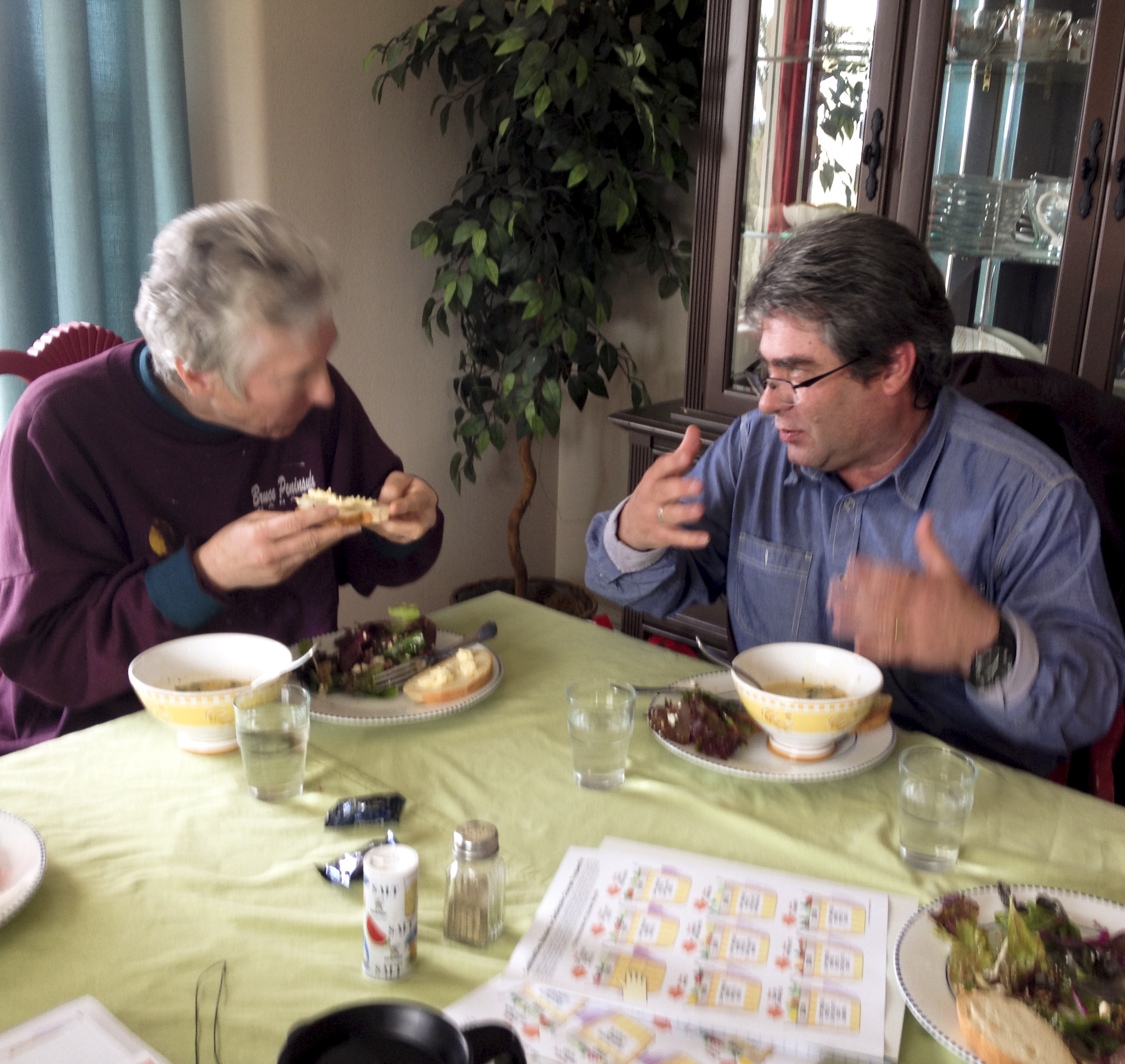
So when I visited a group of Southern Utah producers, I was delighted to meet folks who matched that pioneer grit. People who somehow coaxed a harvest out of unforgiving winds, wild temperature swings, and a drought that seemed determined to “hang out” indefinitely. Despite all that, they were building local markets, connecting with their communities, and strengthening the regional food system. Most surprisingly, they proactively invited me, a marketer and my regulator colleague to lunch‑and‑learn to share resources. The training was engaging and instructive.
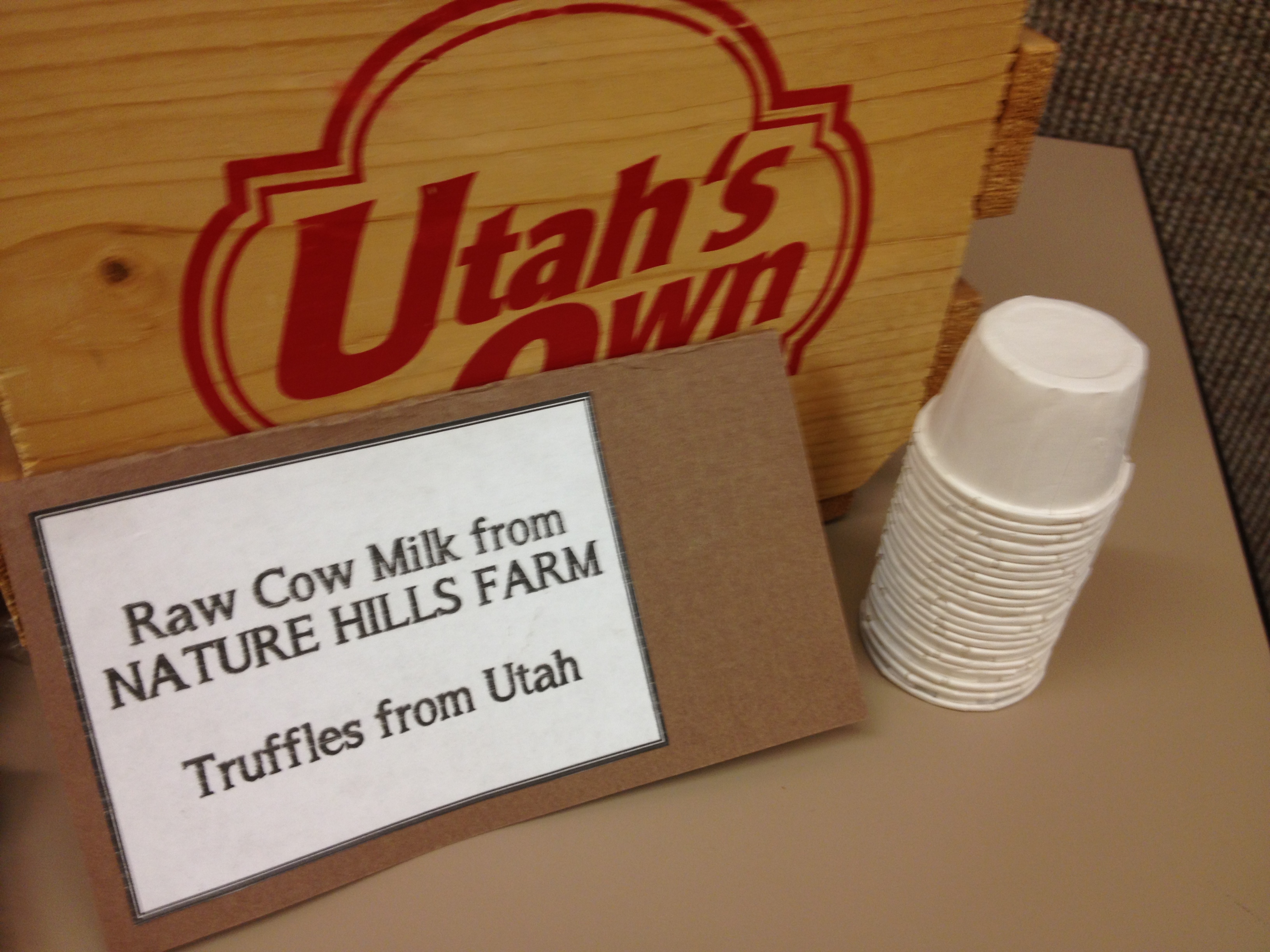
As is tradition at most farmer gatherings, it ended with food. The group bootstrapped the event, keeping costs low by bringing something to share. A woman approached me proudly with her contribution: fresh cold milk ready to be poured into small, sacrament-sized cups. I put it on the table without a second thought.
Well, folks, that’s when all hell broke loose.
My phone started ringing relentlessly. Like any good host, I ignored it and stayed focused on the people in front of me, but it just kept ringing and ringing.
Worried something was wrong at home, I stepped outside. To my suprise, the missed call wasn’t from my family, it was from my boss.
“What can I do for you, boss?” I asked.
“Tamra what in the stars are you doing down there serving people raw milk? He pressed. “Shut it down. We’ll talk later.”
Mortified, I returned to the group, apologized to the producer and told them we couldn’t serve the milk. Because it was raw, and apparently people were going to die.
Little did I know then that this scene – this product, raw milk – would turn into a battle I couldn’t win no matter how much Sanpete grit I threw at it.
Farmstead Raw-Milk Stories: From Producer to State Agency
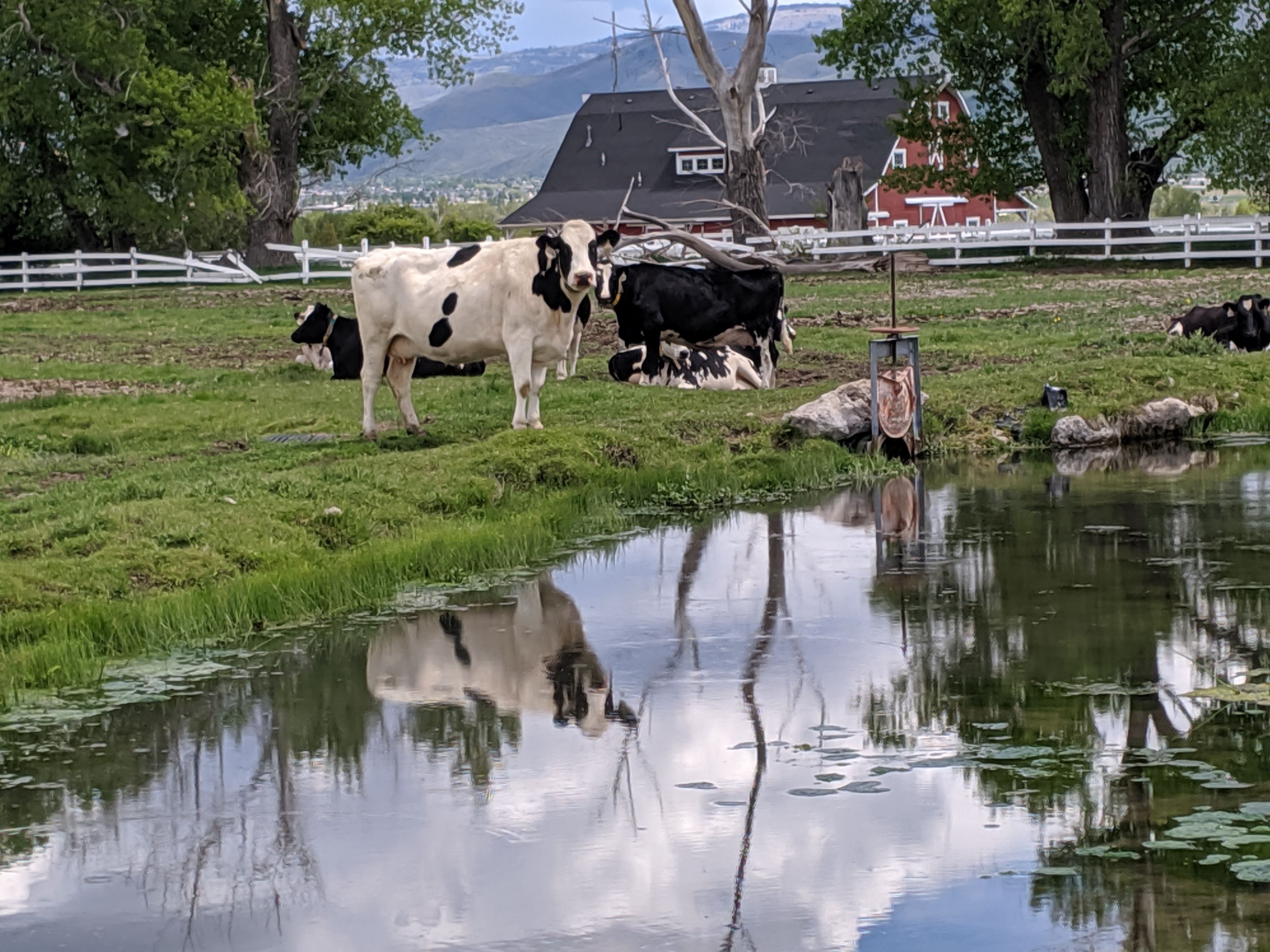
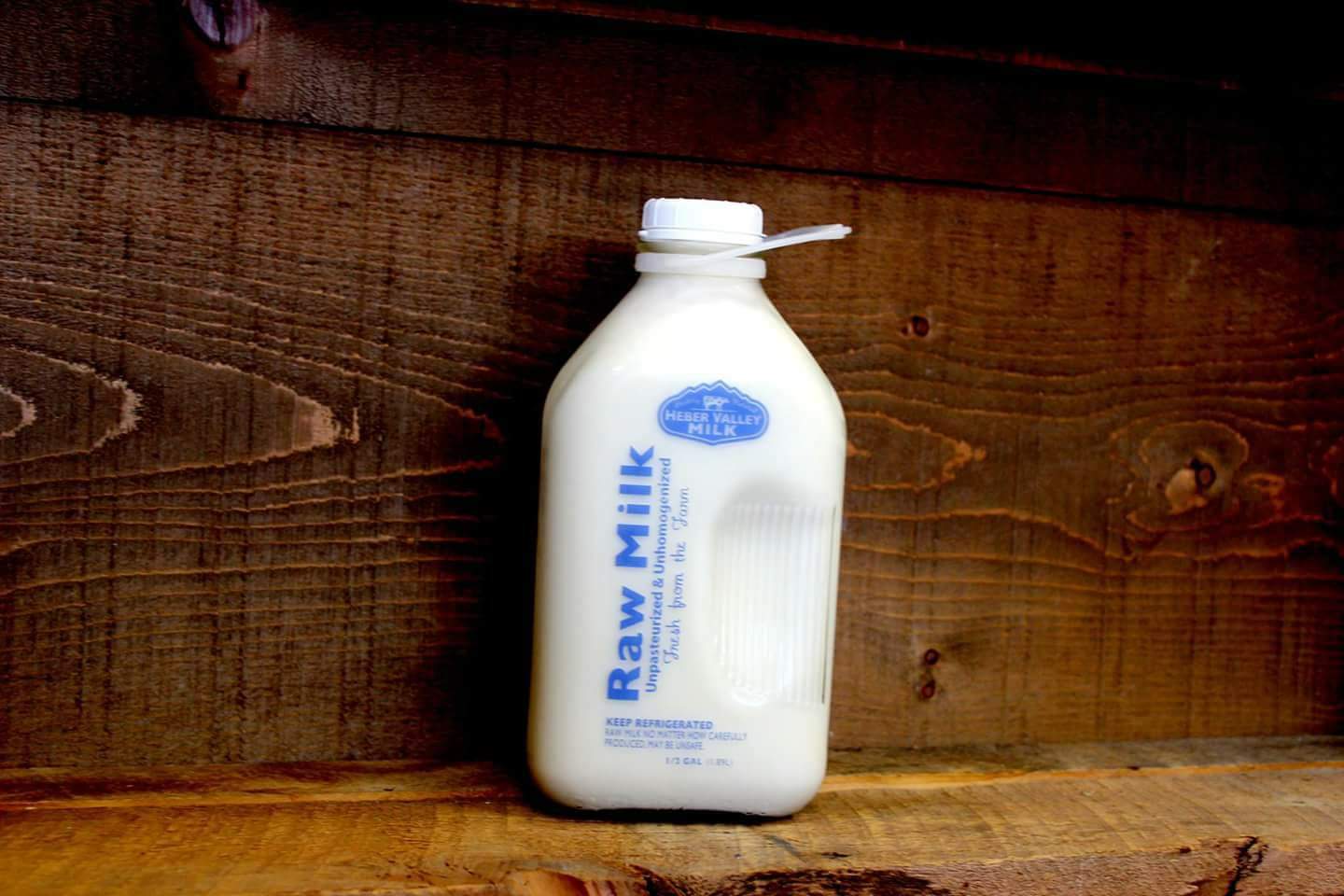
I eventually left state employment and joined a small dairy farm as a marketing and communications specialist. They sold raw milk at the community’s request and followed every regulation required of them.
Then one morning I learned the health department issued an advisory claiming our farm was the source of a public-health outbreak.
“Is it true?” I asked, drawing on my crisis communications training.
“We don’t know yet,” they said. “We’re testing.”
Getting through the process was cumbersome. Emails went unanswered. Phone calls disappeared. Our third-party lab results came back clean. Meanwhile, our raw milk — sold at $3.50 half-gallons — was either dumped into cheese vats or sold to a manufacturer for sixty-five cents.
Customers called daily asking when they could buy again. One eventually came forward and admitted they’d also eaten rotisserie chicken that week and had suspected that was what made them sick. Oddly enough there was also an active advisory on that product at the time. Still, we remained the source of said outbreak. I was flabbergasted.
We survived it. Later, a public records request revealed that the so-called “confirmed” cases were sporadic spread across more than eight months. Internal emails among agencies showed deep bias against raw milk.
Our CEO met with state leadership. Nothing changed. Eventually, raw milk was pulled from our shelves and replaced with pasteurized. Maybe regulators saw that as a win, but was it? What about the consumers that had relied on that source for nearly a decade?
Nearly five years later, I was back in state employment just as the pandemic sent local‑food demand through the roof. We built infrastructure, secured grants, and kept markets open.
And once again, I found myself balancing market innovation against the full weight of food regulation.
I’d worked with one farm for more than 15 years and always admired their strong market presence and willingness to follow every rule and obtain every permit for meat, eggs and yes, even raw milk. So imagine my surprise when a joint advisory was suddenly set to name them publicly.
And yep, hell broke loose again. Only this time, it was a nightmare. I had a front‑row seat to the ultimate boxing match between a local farm and state regulation, played out squarely in the public eye.
As program manager and mediator, I pushed for quick resolution, for the farm and for the agency. This was about a long-standing relationship I had nurtured for more than 15 years. The farm invited the agency for a visit; I reassured leadership they just wanted answers, peaceful resolution.
The discomfort from our side was immediate on arrival: no yelling, just avoidant eyes, some pacing, and most shockingly silence. Forty‑five minutes of it! Only when the farmer finally asked, “How can we fix this?” did the conversation start…and it ended five minutes later.
Folks, that was the day my give‑a‑damn broke. The hardest lesson of my career sucker-punched me: no matter how hard a farm worked to innovate or comply, regulators still held all the power and there was nothing I could do to change that.
Six months later, I resigned by mutual agreement. I walked away heartbroken from an industry I loved, needing time to heal from a career‑breaking battle and the lingering effects of a severe concussion.
Local Farmer vs. Public Health:
So imagine my surprise when, in my new job while advocating on Capitol Hill for public education, raw milk once again crossed my path. Three bills now stand to decide the fate of livelihoods and land: HB179, HB283 and SB217.
Lawmakers are puzzled as to why we’re talking about raw milk, AGAIN, on the Hill; and frankly so am I. Why hasn’t this been fixed in 15 years?
But really, these bills point to a deeper issue: a broken food‑regulation system built for a world we, as consumers, created with our own purchasing power.
Starting in the 1980s, food markets and manufacturing centralized nationwide. In Utah, we sold off farmland and water shares to make room for businesses and housing. Livestock production shifted from local meat and fiber to trucking animals out of state. Dairy stayed mostly local because of its short shelf life, but even then, processors dwindled from many to just a few. And slowly, very slowly, a generation stopped gardening, preserving, and buying local food. It was easier, and cheaper, to just go to Costco, Walmart, or Amazon.
And we got fat and sick.
Yet something is stirring in communities. Families across the country are waking up and demanding food closer to home, cleaner ingredients. We went through a pandemic and experienced empty shelves for the first time; not due to a lack of production but due to uneven distribution. Even the US Secretary of Health (love him or hate him) is preaching a movement towards REAL FOOD. And the market is responding.
The problem? Regulations. They’re like 50,000 pound milstones around a local producer’s neck. A little perspective? Federal dairy regulations are reaching biblical lengths.
But remember these food regulations were created for a centralized system — which oftentimes champions huge volume, huge waste and comes with huge risk. And yes, a hell of a lot of manure. And surely, if hundreds of people touch my food products before it reaches my table, ZAP the hell out of it. Heavy handed oversight makes sense there.
But what about a Utah farm serving just their community or even parts of Salt Lake or Summit County? A farmer trying to save what’s left of the family operation, hoping for even a sliver of market share because they can’t compete with today’s prices? They innovate. They build a community of customers: friends, and neighbors. They do what they must to keep revenue flowing. This is sustainable agriculture. And yes, they even sell raw milk for $13 to $15 a gallon. Consumers gladly pay it, those farms sell out every single week.
However, then a regulator shows up on these local farms with a biased-education built from one message: food kills (people are going to die) and raw milk holds the murder weapon. They proclaim, “Save the children!” just like Louis Pasteur did in the 1860s.
But folks, we’re not in 1860 anymore. Look around. We have refrigeration, temperature gages, research, computers, testing and above ALL amazing sanitation products, perfected over generations. So producers that truly want to maintain strong revenue streams, study those practices meticulously, I’d argue more than their food inspector friends. Sick friends means no sales, and no sales means no farm.
So the law and administrative rule need to shift so farms can actually innovate. And just as important, interagency training must finally shake off generations of “people will die” fear‑based bias. Inside state agencies, we need someone willing to push back on regulators and champion producers—not people who nod at bias in a meeting and then head out for street tacos and golf.
I’ve seen the balance work before, it can exist: a director, deputy and program managers who understood the difference between promotion and regulation and who kept each other in check like any good system of shared power.
Your Right To Die & To Diversify:
So, dear reader, here’s some pure Sanpete honesty: you have the right to choose what you eat and yes, even the right to die. Raw milk has existed for generations, and I have yet to see it wipe out a municipality like it reportedly did in the 1860s. Sure, there are risks and there have been illnesses, but no more than plenty of foods we eat every day.
Think about it: we all still go back to that “inspected” college‑town dive that once gave us food poisoning. We understand tradeoffs. As consumers, we read the label: “Raw milk, no matter how carefully produced, may be unsafe.” But don’t blame your local farmer if your stomach reacts the same way it does to a late‑night bean burrito. Don’t show up with a lawyer to sue them for your choice.
And to my friends in state agencies clutching their pearls over “the masses dying from raw milk,” here’s some perspective: after 15 years of watching how food sales actually work, I can promise you raw milk is never going mainstream. It’s highly perishable. Fluid‑milk demand is shrinking. Major retailers won’t touch it. This is a niche product for informed health-conscious consumers, not a public‑health apocalypse.
And if raw milk somehow wipes out the masses like the bubonic plague, I’ll answer for it in the hereafter.
There’s also a real economic cost to pushing a high‑demand product out of the local market. Utah’s Own reminds us that local agriculture makes up 15 percent of our economy, and buying local keeps $0.65 of every dollar here at home. By that math, every gallon of raw milk reinvests almost $9 into our communities (and that’s not counting butter, cream, yogurt, or ice cream). That’s real money. And local farmstore sales tax helps fund Utah roads, schools, and yes, even state salaries.
So let’s KEEP FARMERS FARMING by allowing innovation in all its forms. Processes must be clear and executed well. Administrative rules should follow the law, not personal bias.
A resilient local food system depends on policies that build strong, diverse revenue streams, not shut them down.
Disagree Better: A Plea for Unity
And so, my friends, I offer this raw‑milk story for perspective, dedicated to the industry I love and the consumers who depend on it. As another Sanpete farm boy likes to say, “We’ve got to learn to disagree better.” Regulators, producers, consumers, all of us.
To my regulator friends: farmers have the right to sell what the law allows. Quincy Boyce taught me that years ago: you’re the messenger, not the law itself. So if you’ve never stepped foot on a farm before your state job, don’t panic at the sight of a fly. Animals poop. Novel concept. Take a breath (not too deep), ask questions, listen. You might be surprised by how meticulous some producers are. And remember they’re human, just like you, trying to make an honest living.
And to the farm community that raised me, and the urban folks who inspired me: this isn’t a shot across the bow. It’s a plea for unity from sun‑tanned Chacos to Ariat square‑toed boots.
Here’s the truth: without diversified, direct‑to‑consumer markets, Utah agriculture won’t survive. We’re already buckling under urbanization, inheritance taxes, drought, and rising costs. Some producers are trapped in a centralized system; others are trying new markets as a last‑ditch effort to save the farm. But all of them love the land, soil, and animals. Let’s not take out the farmer down the lane just because they farm differently than we do.
Because if we can’t unite as an industry over something as small as raw‑milk policy, we’ll lose the bigger fight to parking lots, condos, and endless suburbia. Or we’ll become an agritourism state where pumpkin patches and apple‑cider donuts are the last scraps of our agricultural identity. People might survive but the resilient, self‑sustaining lifestyle we are so proud of will not.
As a descendant of Eliza Staker (who survived the Martin and Willie Handcart tragedy) I carry her warning forward: “Mother had gold in her pocket, and she and her children were starving.”
Let’s not leave our future children in the same position. Let’s build strong local food systems so we have real food, not just gold, in our hands.
Get involved in the conversation, whatever your position, comment here or better yet, contact your representative, share your thoughts on HB179, HB283 and SB217. This is the beauty of America and democracy.
Let’s believe in the future of agriculture together, with a faith proven not by words, but by deeds. Let’s truly KEEP FARMERS FARMING.
A Personal Thank You Note:
I would be ungrateful if I failed to recognize publicly the mentors who taught me the power of local markets and agriculture advocacy.
To Seth Winterton and Jed Christenson thank you for showing me the value of real networking and honest, hard‑truth conversations with producers of every kind.
To my regulator‑friend Quincy Boyce, thank you for sitting down with me early in my career and teaching me why public food safety matters and how proactive education strengthens emerging markets.
And to Gillmor Family, founders of Morgan Valley Lamb, your story gave me hope, for my family operation and for local producers across the state. You truly built a market for lamb in our great state, and I’ll be forever grateful.
To the late Grant Kohler – I miss you fiercely! Your smile, your laughter, and your unwavering vision for a strong, innovative dairy industry still guide me. You helped me connect to my Grandpa’s industry and I LOVED telling your family’s story to consumers and visitors alike. You were, without question, the BIG CHEESE.
To all my educators, and youth advisors from elementary through college and graduate school: 4-H, FFA, Pony Club and more – you made all the difference in my education. Mr. Allen, “it you can’t amaze ’em with brillance baffle ’em with BS” has been a life compass. Mr. Tarpley, thanks for accepting the answer “lack on wisdom” (James 1:5) on a mid-term; And to my Okies, thanks for teaching me of my unique strengths and talents. I’ll forever be your Ms. Woo.
And to ALL the beloved local producers across the state, in the trenches, THANK YOU. I am continually amazed by your grit, tenacity and ability to maintain diversified operations and take care of your consumers with more passion and love than we deserve. I’ll see you at a farmstore or market soon. Much Love.
My personal summaries of the proposed bills:
HB179: Balances consumer choice with some producer responsbility, but adjusts regulations to be less overbearing. Outlines a process that requires verification to link a producer to a public-health outbreak.
HB283: Allows producers to sell raw milk locally under scrunity: requires farm registration and has looser parameters for linking a producer to a public-health outbreak.
SB217: Consumer accept complete responsiblity by reading labels; raw milk producers would be defined and permitted to sell or distribute their product under the Home Consumption and Homemade Food Act.
 Tamra Watson