Recent research shows that 81 percent of all consumers go online to investigate purchase options before heading to a retail location; most (60 percent) start the process with a search engine, such as google or yahoo.
With such knowledge, companies need to be as concerned with their web representation as they are with their product or organization; in this digital age, credible and viable content creates the difference between a dollar earned or a dollar lost.
Consumer conscious content is similar to launching a new product or organization. It requires an active investment and understanding of:
- Consumer Profile: what are their needs and wants?
- Consumer Language: how do they go about discovering the information they need or want?
I have used these principles throughout my experience.
Heber Valley Cheese:
Ecommerce:
My biggest achievement within this company has been the implementation of social media to generate brand awareness & increase event sales.
When I joined the team in 2016, none of their tasting events were offered online – we changed that very quickly. With a small budget, we were able to triple the amount of attendees and increase our total web sales by more than 150 percent in the first year – and more than 900 percent in three years (2016-2019).
Here are some ads thtat I created:

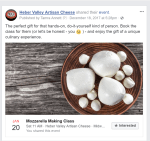
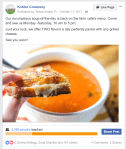
In addition, I was able to implement video into our overall branding strategy to educate others about our story.
You can preview them on our company’s Facebook & Instagram Pages:
Utah’s Own Website
For more than two years, I researched the needs of both Utah consumers and Utah business owners, to ensure active and consumer conscious content.
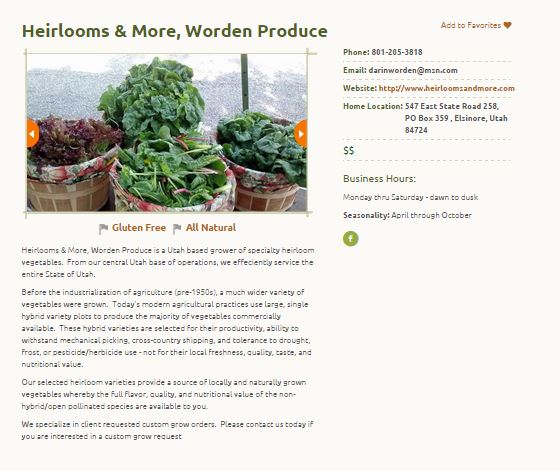
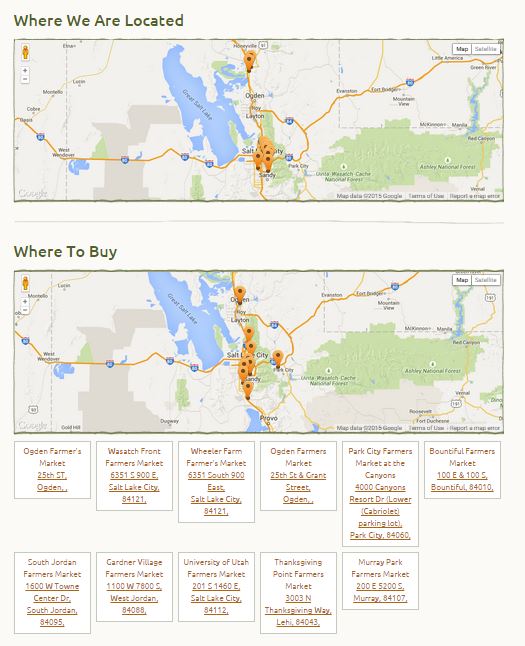
New features were added to members’ profiles including: product photos, pricing, nutritional categories (gluten free, organic, etc), business hours, product seasonality, social media connections as well as where-to-buy and company location maps.
Consumers can create their own profile to save favorite companies, create shopping lists or recipes and share with friends.
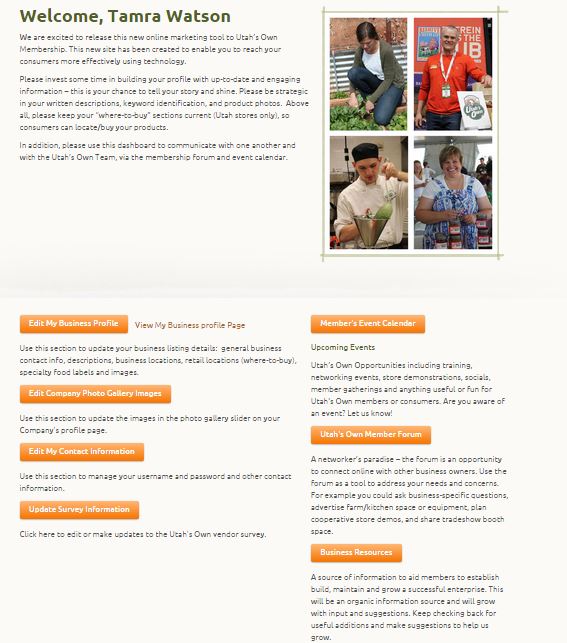 In addition, the new web platform also serves as a tool for Utah’s Own to communicate with its member companies. Each business has an individual dashboard that enables them to update their online profile, fill out a business assessment (regarding sales, distribution and employment), and access valuable business resources. They can also RSVP to annual events or interact with other companies via the membership forum.
With the help of Norse Digital, http://www.utahsown.org was launched in the Fall of 2014. Both member and consumer feedback has been overwhelmingly positive. Data extracted from Google Analytics also shows an increase of web visitors and user engagement.
Utah’s Own Social Media:
The best analogy I’ve heard regarding social media marketing was described by David Meerman Scott:
“If you follow my metaphor of the web as a city, then think of social media and the ways that people interact on blogs, forums, and social networking sites as the bars, private clubs, and cocktail parties of the city.”
The problem with most social media strategies is they expect the forum to act as a megaphone to the company’s achievements, policies or products – and let’s be honest, nobody likes a self-promoter to ruin the party.
I built the social media platform for Utah’s Own on Facebook, Instagram and twitter.
Facebook:
Truthfully I’ve found that some of my greatest successes on Facebook happen “in-the-moment”, just like they 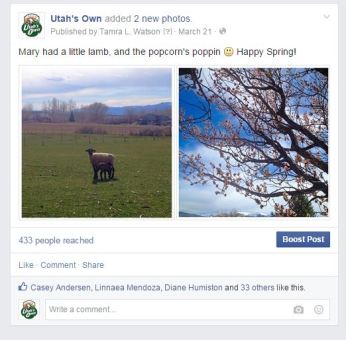 would at a party. The content of these posts generally taps into a shared memory or preference held by the targeted population.
For example – this spring as the blossoms were blooming and the baby animals were found in the fields I mentioned two nursery rhymes that most Utahans associated with Springtime.
While the post did not challenge a consumer to buy a local product (one of the main purposes of Utah’s Own), it did establish the relationship between Utah’s Own and Agriculture in a fun and childlike way.
The post received positive feedback, in the form of likes (i.e. 36 people).
I have also discovered timeliness is important for 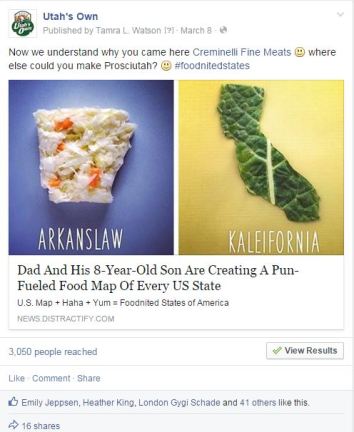 social media forums – especially when it comes to trendy news or content. At a party, some of the most popular
people are the ones who know the “juicy stuff.”
So as I was laying in bed on a Sunday morning, scrolling through my Facebook news feed, I stumble across some “juice”: an entertaining article about a father and his son who created a food map of every US state.
By understanding my target audience interests, as well as stumbling upon it before it was old news, I posted the article on Utah’s Own feed.
Within a couple of hours, the post had more than 40 likes and 16 shares.
I also discovered the power of boosting – for less than $5, I was able to increase the visibility of the post, and give one of our member companies some good publicity.
Twitter: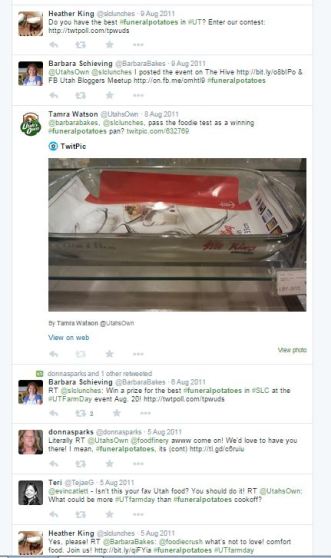
If social media is the party then Scott claims twitter is the little chatter one catches while going to and from the
bathroom. It’s unlikely someone will pay attention unless you talk to them directly.
I’ve found twitter one of the best places to build relations with people in the food industry – I’ve talked often with food bloggers and reporters and passed on newsworthy content.
For example, a soup recipe was featured in the Salt Lake Tribune in 2011, because reporter Kathy Stephenson made a request on twitter and I responded.
As you’ll discover on my campaign page – the annual Funeral Potatoes Recipe Contest came to because I stumbled upon a conversation two people were having about cultural foods in Utah. The result ending in the formation of a recipe contest.
So, with the help of a freelancer food writer and a professional food blogger, I hosted the first funeral potatoes competition at the Salt Lake City Farmers Market.
Since that cookoff, I have receive multiple inquires and social media hits (via our blog) for funeral potato recipes. I’ve even been interviewed by a woman from New Jersey who was writing a book entitled: Foods to Die For.
Instagram:
Consider Instagram the non-verbal communication that happens at a party – you know the flashy shirt, a wink on an eye or some serious bling. The purpose is to catch the eye, and then if you’re lucky have a conversation. Plus its low-maintenance – people either like it (by clicking the heart) or they keep scrolling.
The following examples show how I’ve used Instagram to communicate seasonality, trendy news, retail locations or special holidays. The image sparks an interest, and hopefully gives the consumer incentive to learn more.
-

- First Crop – Sugar Snap Peas
-

- Early Spring Morning
-

- Utah Onions in the Store
-

- Trendy Picture Share
-

- Ultimate Queso Dip
-

- Video – Bottling Raw Mix
Summary:
Truthfully, just like there is not a right or wrong way to host or attend a party – there’s not a magic bullet method to social media. What’s most important is that you remember the purpose: Have Fun. Socialize. Engage with Others.
 Tamra Watson